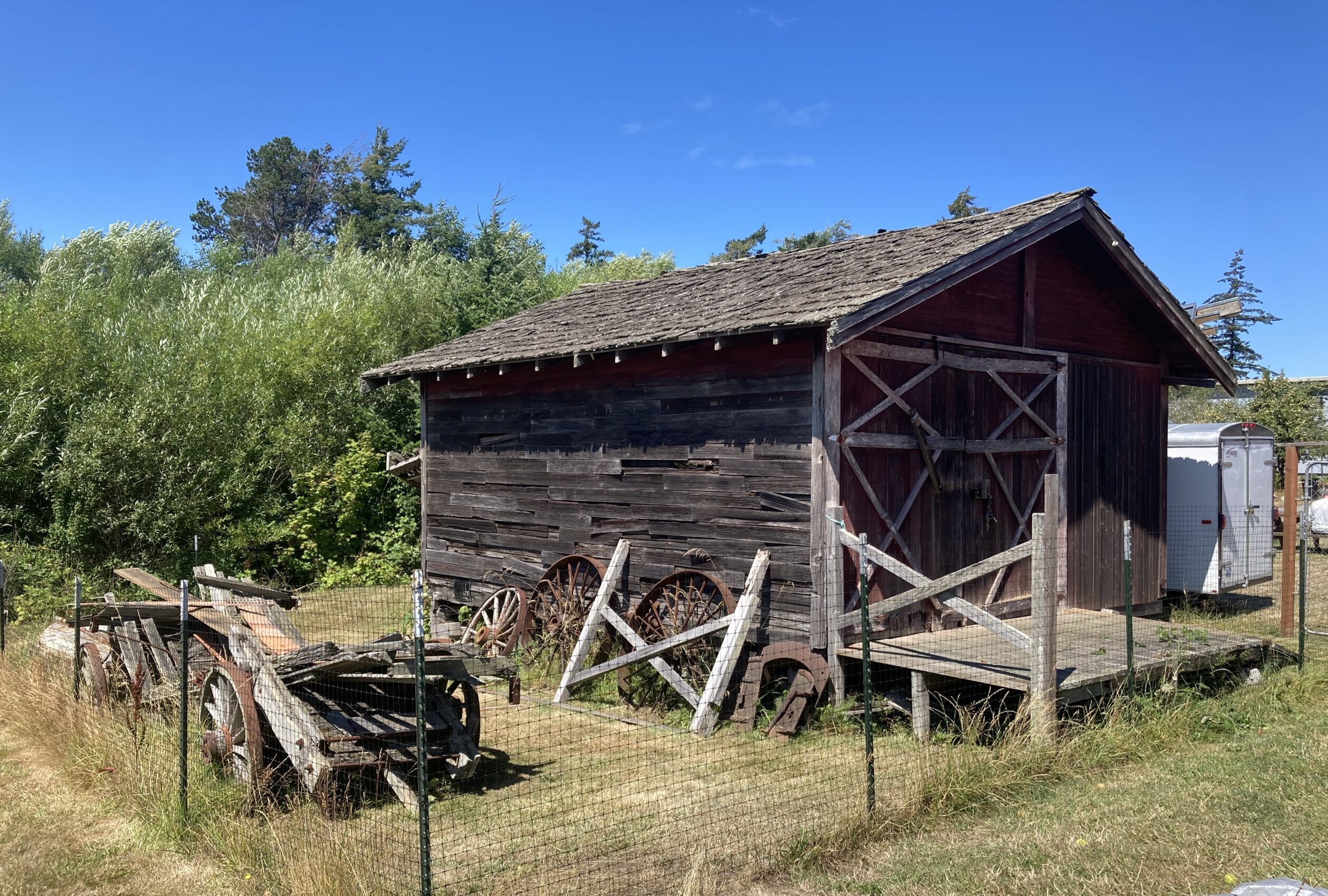
The historic “Fire Barn” located behind the Orcas Island Historical Museums on the Village Green served many purposes during its 90-year lifespan. From garage to residence to garage again, the Fire Barn was most recently used as auxiliary storage for the Museums. After these decades of service, the building is no longer in stable condition and will be torn down.
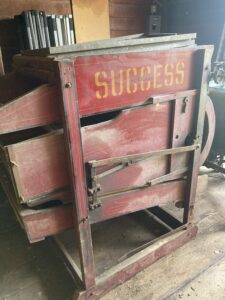
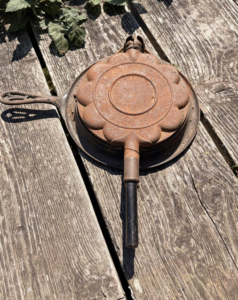
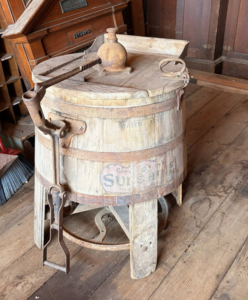
In preparation for the Fire Barn’s removal, the Orcas Island Historical Museums is processing exhibit supplies and artifacts that have been stored inside (mostly oversize items and agricultural equipment). As we continue to inventory and evaluate our collections we occasionally find objects that have missing or incomplete documentation. In these cases, the Museums must follow Washington State’s Notice of Abandoned Property (RCW 63.26.040) to either identify the original donor or take official ownership of the item.
If you believe that any of these items may have been owned by you or your relatives, the Museums encourages you to review the Claims page on our website. This page will feature any unclaimed or unidentified items for a period of 3 months; the same information is also available in printed format in our office. Please contact the Museums office with any questions or to submit a claim on an object.
Likely constructed by Dave Nicols in the 1930’s, the Fire Barn started its life as the garage for a Standard Oil truck that made deliveries around the island. Howard Wilson was the delivery driver, perhaps a fitting career as he also drove the Eastsound school bus for 32 years. Howard and his wife Geneva lived between North Beach and Prune Alley roads with an impressive garden. When the garage wasn’t needed for the Standard Oil truck any longer, the Wilsons’ son, Howard B “Rusty”, converted the building into a personal residence.
After World War 2, the garage-turned-residence was moved to the intersection of Prune Alley & Rose Street to the site of the new fire station, and subsequently reconverted back into a garage to house Eastsound’s first fire truck. The much-needed vehicle was purchased secondhand in 1948, the same year that the Orcas Island Fire Protection District was voted into existence. Apparently there were drawbacks: a notoriously unpredictable battery required jump-starts, and the carburetor preferred a swig of gas to get going. The Fire Barn was situated on a small rise in the ground so the fire truck could be pushed and jump-started.
Unfortunately, this little truck that could, eventually couldn’t. Just two years later in 1950, the truck engine froze and was ruined. The Fire Barn was eventually wired for electricity so that a heater could be installed. It’s unclear when the garage became known as the “Fire Barn” but it was still actively being used by the department in the mid-1960s when a brand-new Ford Class A Pumper with 1,000 gallon capacity was purchased and housed there. This Ford fire engine may be more familiar than you expect– it was purchased by the Orcas Island Volunteer Firefighter Association and now appears in parades and community events.
Orcas Fire Station #26 was rebuilt on Rose Street in 1981, although it is currently occupied by Matia Kitchen and Lounge (also the former home of the beloved Roses Bakery & Cafe). Around the time of station rebuild, the Fire Barn was moved to its present site at the Orcas Island Historical Museum in the early 1980s. The Museum has used it for events, over-sized artifact storage, and even a fireworks booth. As this era of the Fire Barn comes to a close, we are asking the community to review any unidentified objects that have been listed on the Claims page of our website. We will continue to document the lifespan of this iconic building and are gladly accepting photos, facts, and reminiscences.
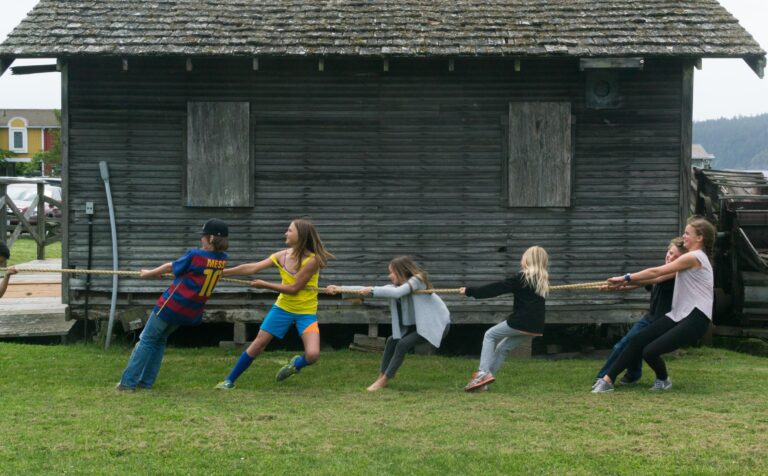
The Fire Barn has been a part of Eastsound life since the 1930s, seen here during a timeless game of tug-o-war at a Historical Days celebration.
Glenn Aust
Trustee
Glenn is part of a 7th generation homestead family on Orcas Island. He lives full time in Deer Harbor and is grateful for this great community.
Glenn works and owns a media production company and spends his free time volunteering on Orcas. In addition to the Orcas Museum board, Glenn is also Vice President and Historian of the Deer Harbor Community Club. He is also a SJC Cemetery Commissioner serving Orcas. All of these provide a fulfilling opportunity for serving our community.
Michelle Hassebrock
Program Administrator
Michelle (she/her) grew up in Whatcom County and has lived on Orcas Island since 2020. In the spring of 2022, she joined the Museums as a weekly docent. Within a year, Michelle decided to bite the bullet and become a full-time staff member. She now works as the Program Administrator, and is currently working on revitalizing the Oral History Project and designing new exhibits.
Debbie Durand
Museum Administrator
An Orcas resident since 2017, Debbie has family ties to what feels like half of Olga and beyond. She teases she knows more of her husband’s family history than he does. Debbie is our museum admin, but also bookkeeper for many island businesses, and treasurer to several non-profits beyond the park.
Nancy Stillger
Executive Director
Nancy has lived on Orcas since 2020 coming here as an empty nester with her avid sailor husband. Nancy is New Mexico born, raised in Singapore and then has had many other stints up and down the West Coast. She has over 30 years in the non-profit industry always working in the areas of arts, culture, literature and heritage. She has a BA degree in Economics from Scripps College and a MA in Urban Planning from UCLA with an emphasis on the history of the built environment.